
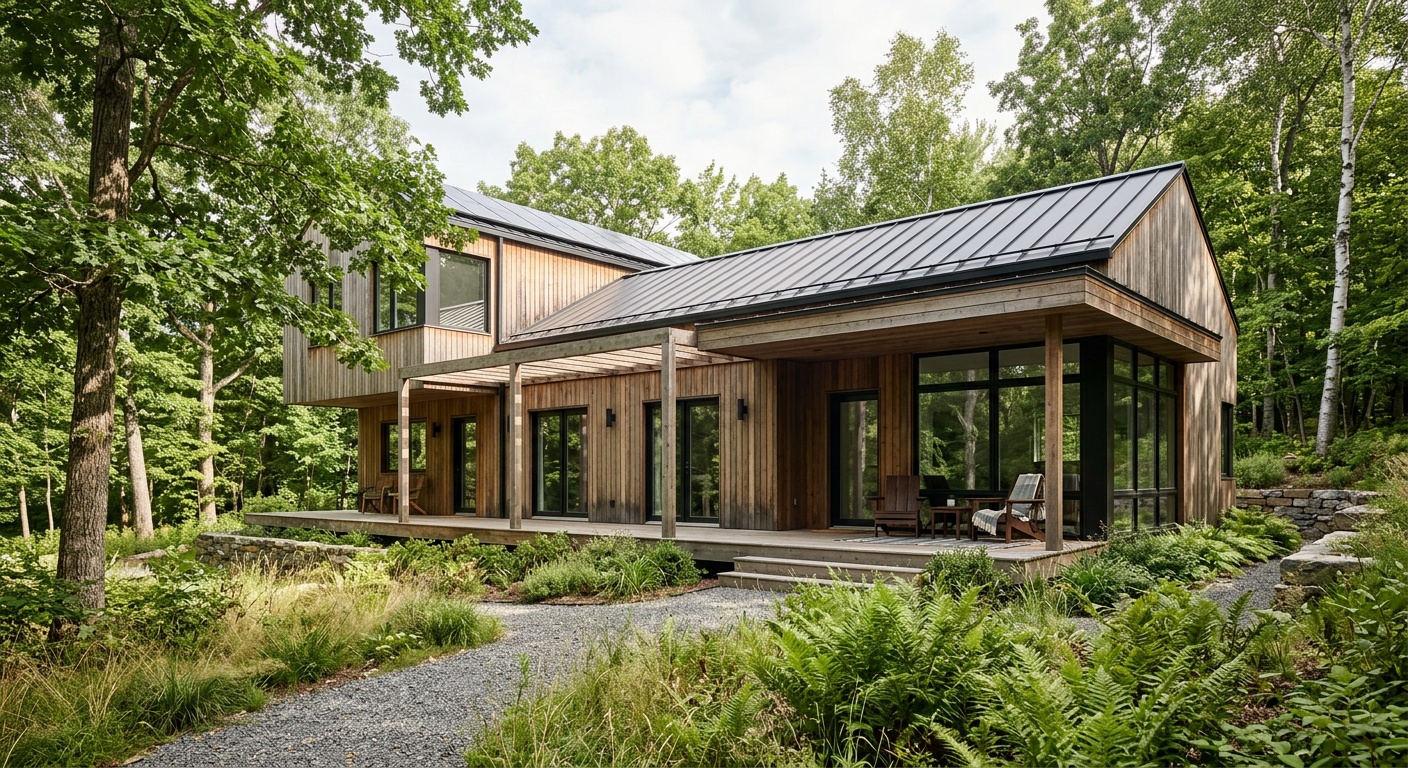
Passive House Design Strategies for Hot Climate New Builds
Reading time: 14 minutes
Building a new home in a hot climate comes with a paradox most architects quietly wrestle with: the harder you try to keep a building cool using conventional methods, the more energy you burn — and the hotter the planet gets. It’s a feedback loop that’s becoming harder to ignore as global temperatures push past records year after year.
Here’s where the conversation gets interesting. The passive house standard — originally developed for cold Northern European winters — has evolved into one of the most powerful frameworks for hot climate construction. In 2026, with energy costs at near-record highs in Australia, the Gulf States, the American Southwest, and Southern Europe, builders and homeowners alike are turning to passive principles not as a niche lifestyle choice, but as a practical, financially sound response to climate reality.
Think of this article as your strategic field guide. Whether you’re designing from scratch or advising a client on a new build, we’ll walk through the strategies, trade-offs, and real-world examples that make passive house work in the heat — not just survive it.
Table of Contents
- What Passive House Means in a Hot Climate Context
- The Six Core Strategies for Hot Climate Passive Design
- Real-World Case Studies: Hot Climate Passive Builds in 2026
- Comparing Passive vs. Conventional Builds in the Heat
- Common Challenges and How to Overcome Them
- Energy Performance Visualization
- FAQs
- Your Hot Climate Passive House Roadmap
What Passive House Means in a Hot Climate Context
Most people hear “passive house” and picture a super-insulated Scandinavian box keeping out biting cold. That’s understandable — the standard emerged from Germany and Austria in the early 1990s with heating demand at the forefront. But the principles are thermodynamic, not geographic. They’re about controlling energy flows through the building envelope, regardless of the direction those flows are moving.
In a hot climate, the goal flips: instead of trapping heat inside, you’re working relentlessly to keep it outside. The Passive House Institute has developed climate-specific criteria — including the PHI Hot Climate classification — that acknowledge this inversion. As of 2026, the international database of certified passive buildings in warm and hot climates has grown to over 4,200 projects, a 38% increase from 2023, according to the Passive House Institute’s annual registry update.
The core performance targets for a hot-climate passive build typically include:
- Cooling demand below 15 kWh/m² per year (or peak load under 10 W/m²)
- Total primary energy consumption under 120 kWh/m² per year
- Airtightness at n50 ≤ 0.6 ACH (air changes per hour at 50 Pascals pressure)
- Thermal bridge-free construction throughout the envelope
Meeting these targets in a 40°C desert environment requires a different strategic toolkit than meeting them in Frankfurt. Let’s unpack that toolkit.
The Six Core Strategies for Hot Climate Passive Design
1. Reorienting Your Solar Strategy: Shade First, Always
In cold climates, passive solar gain is a gift — south-facing glazing is carefully maximized to harvest winter sun. In hot climates, uncontrolled solar gain is the enemy. The strategic pivot is this: solar orientation still matters enormously, but the objective becomes minimizing gain rather than maximizing it.
For hot climate new builds, effective solar strategy involves:
- Deep overhangs and horizontal shading devices on east, west, and south-facing facades that block high summer sun angles while still allowing low winter sun (for climates with mild winters)
- East and west wall protection — these are often the most problematic facades because the sun is low in the sky during morning and afternoon, making horizontal overhangs less effective. Vertical fins, trees, or recessed windows work better here
- Compact building form — a lower surface-area-to-volume ratio reduces the total envelope exposed to solar radiation
- Cool roofs and reflective surfaces — highly reflective roofing materials (albedo above 0.65) can reduce roof surface temperatures by 30–50°C compared to dark conventional roofing
Pro Tip: Use dynamic shading modelling software during the design phase. Tools like DesignPH 2.6 (updated in early 2026 to include expanded hot climate climate zones) can simulate hourly solar gain across the full year and help you fine-tune overhangs to within centimetres of optimal performance.
2. Superinsulation — But Applied Intelligently
Insulation in a hot climate works the same way as in a cold one: it resists heat flow. In a hot climate, that means resisting the flow of heat from outside in. The challenge is that thick insulation layers also trap internal heat gains — from cooking, appliances, and occupants — making the cooling load higher if the building isn’t well-ventilated at night.
Best practice for hot climates in 2026 involves:
- Roof insulation as the priority — roofs receive the most solar radiation, and heat naturally rises. R-values of R-60 to R-80 (approximately RSI-10 to RSI-14) are increasingly standard in passive hot-climate roofs
- Wall insulation of R-30 to R-40 (RSI-5 to RSI-7) using materials with good thermal mass properties in hot-dry climates, or reflective foil systems in hot-humid climates
- Thermal mass placement inside the insulation layer — heavy materials like concrete or rammed earth work as thermal batteries, absorbing heat during the day and releasing it at night (effective primarily in climates with significant day/night temperature swings)
- Avoiding thermal bridges — structural elements that penetrate the insulation layer create pathways for heat to conduct through. Every balcony slab, window frame, or concrete column that bridges the envelope needs careful detailing
3. Airtightness: The Non-Negotiable Foundation
Perhaps no single design principle has a greater impact on passive house performance in hot humid climates than airtightness. Uncontrolled air infiltration in a humid environment doesn’t just bring in warm air — it brings moisture. And moisture in walls and ceilings leads to mould, structural degradation, and dramatically increased dehumidification loads.
The passive house target of n50 ≤ 0.6 ACH sounds technical, but it’s worth grounding: a typical new conventional home in Australia or the United States in 2026 tests at around 3–7 ACH50. A passive house is 5–10 times tighter. Achieving this requires:
- A continuous air barrier that wraps the entire building envelope without gaps, penetrations, or interruptions
- Carefully sealed service penetrations — every pipe, wire, and duct that passes through the envelope must be sealed with appropriate airtight materials
- Blower door testing during construction (not just at completion) so leaks can be found and fixed before they’re buried behind finishes
- Window and door installation details that integrate with the air barrier layer — not just slapped into a rough opening
4. High-Performance Glazing: Triple Pane or Optimised Double Pane
Windows are thermally the weakest point of any building envelope. In hot climates, the priority shifts from U-value (insulation) to Solar Heat Gain Coefficient (SHGC) — how much solar radiation the glass transmits into the building. Lower SHGC values mean less solar heat gain.
For hot climate passive builds in 2026, the glazing hierarchy typically looks like:
- North-facing windows (southern hemisphere) or south-facing (northern hemisphere): Low SHGC (0.2–0.3), good U-value — these receive the least direct sun
- East/West-facing glazing: Minimise overall area, use dynamic electrochromic glazing where budget allows (prices dropped approximately 22% between 2023 and 2026 as manufacturing scale increased)
- Thermally broken frames: Aluminium frames with thermal breaks or fibreglass frames to prevent heat conduction through the frame itself
5. Mechanical Ventilation with Heat Recovery (MVHR) — Configured for Cooling
A tight building needs controlled ventilation. In cold climates, Heat Recovery Ventilation (HRV) captures heat from outgoing stale air and transfers it to incoming fresh air. In hot climates, the logic inverts: you want to transfer coolness from outgoing conditioned air to incoming warm fresh air. This is Energy Recovery Ventilation (ERV), and it also manages moisture — critical in humid climates.
Modern ERV units in 2026 achieve sensible heat recovery efficiencies of 75–85% and total enthalpy (heat + moisture) recovery efficiencies of 60–75%. In a climate like Houston or Darwin, this means the incoming fresh air is significantly pre-conditioned before it ever hits your cooling system, dramatically reducing the cooling load.
6. Night Purge Ventilation and Passive Cooling Strategies
In hot-dry climates where night temperatures drop significantly (greater than 10–15°C below daytime peaks), night purge ventilation is one of the most powerful passive cooling tools available. Automated windows, motorised vents, or dedicated purge fans flush cool night air through the building, chilling the thermal mass and resetting the building’s thermal battery for the following day.
Paired with a high thermal mass interior, a well-designed night purge system can reduce mechanical cooling energy by 30–50% in climates like Phoenix, Madrid, or inland Australia. In hot-humid climates where nights remain warm and humid, this strategy is less effective — and the focus shifts instead to aggressive dehumidification and shading.
Real-World Case Studies: Hot Climate Passive Builds in 2026
Case Study 1: The Tucson Desert Passive House
In Tucson, Arizona — where summer temperatures regularly exceed 43°C and cooling accounts for up to 60% of residential energy use — a family completed a 185 m² passive house new build in late 2025. The design team at a Phoenix-based sustainable architecture firm used rammed earth walls (450mm thick) inside an exterior insulation layer of 150mm mineral wool, achieving an effective wall R-value of approximately R-35.
Results after the first full summer season (2025): total cooling energy consumption of 1,840 kWh for the year — compared to a comparable conventional home in the same climate zone averaging 8,200–11,000 kWh annually. Monthly electricity bills during peak summer averaged $47, compared to the neighbourhood average of $310. The airtightness test result was 0.42 ACH50 — well within passive house certification range.
Case Study 2: Singapore High-Rise Passive Principles
Singapore’s climate — perpetually hot and humid with minimal seasonal variation — represents arguably the most challenging environment for passive house methodology. Yet in 2025, a 12-storey mixed-use development in the Jurong Innovation District incorporated passive house envelope principles into its residential floors, achieving energy savings of 41% compared to Singapore’s already stringent BCA Green Mark Platinum baseline.
Key design moves included: triple-skin facades with an integrated shading layer, ERV units on every floor with enthalpy recovery, and a radical reduction in glazing ratio from the typical 40–60% (common in Singaporean commercial buildings) to 22% for residential units. The developer reported that residents required minimal supplementary air conditioning — many units ran cooling systems less than 4 hours per day even during the equatorial wet season.
Comparing Passive vs. Conventional Builds in the Heat
Numbers tell a story that design principles alone sometimes can’t. Here’s how passive house builds stack up against conventional construction across five key metrics in hot climate conditions:
| Metric | Conventional Build | Passive House Build | Improvement |
|---|---|---|---|
| Annual Cooling Energy (kWh/m²) | 55–90 | 10–15 | 75–85% less |
| Air Infiltration Rate (ACH50) | 3–7 | 0.3–0.6 | 5–10× tighter |
| Indoor Temperature Stability (°C swing) | 6–12°C | 1–3°C | 4× more stable |
| Construction Cost Premium | Baseline | +8–15% | Payback: 7–12 yrs |
| HVAC Equipment Sizing | Full conventional | 50–70% smaller | Major capex saving |
Data compiled from Passive House Institute (2025 annual report), ASHRAE 2025 climate performance data, and Australian Building Codes Board 2026 efficiency benchmarking.
Common Challenges and How to Overcome Them
Challenge 1: “Passive House Is Too Expensive for Hot Climates”
This is the objection heard most frequently, and it deserves a direct answer. Yes, passive house construction typically carries an 8–15% upfront cost premium in 2026. But this framing misses the counterweight: significantly downsized mechanical systems.
In a conventional hot-climate build, you’re installing large, expensive HVAC equipment to compensate for a leaky, poorly shaded, poorly insulated envelope. In a passive house, the envelope does the heavy lifting, and the HVAC system can be 50–70% smaller. In a 200 m² home, this mechanical system saving alone can offset $15,000–$35,000 of the envelope cost premium, depending on the market. Add 25 years of dramatically reduced energy bills, and the financial case becomes compelling.
Strategic tip: Frame the conversation with clients as “what’s the total cost of ownership over 20 years?” rather than “what’s the construction budget?” The answer almost always favours passive house.
Challenge 2: Finding Certified Builders and Designers
Passive house in hot climates is still a specialist field. As of early 2026, there are approximately 3,800 Certified Passive House Designers (CPHD) globally, but distribution is uneven — concentrated in Europe, with relatively sparse coverage in the Gulf States, Southeast Asia, and much of sub-Saharan Africa where hot climate passive design is most needed.
Practical solutions:
- Use the Passive House Institute’s international designer/builder registry to identify certified professionals in your region
- For remote or underserved regions, consider engaging a certified designer in a digital-first consultancy model — passive house design is highly compatible with remote collaboration given the simulation-heavy workflow
- Ask potential builders about their experience specifically with blower door testing and airtight construction — these skills are the most critical and the hardest to learn on the job
Challenge 3: Humidity Management in Hot-Humid Climates
Hot-humid climates (think Miami, Bangkok, Lagos, Brisbane summers) add a layer of complexity that pure insulation and airtightness can’t solve alone. Moisture management becomes the central design challenge. In these climates, the wrong vapour control layer placement can lead to interstitial condensation — moisture accumulating inside walls where it can’t dry out.
The 2026 best practice for hot-humid climates involves:
- Vapour retarder on the exterior (warm) side of the wall — the opposite of cold-climate practice. In hot-humid climates, the moisture drive is from outside in, so the retarder goes on the outside
- Vapour-open but water-resistant exterior cladding systems that can drain and dry quickly
- Dedicated dehumidification integrated with the ERV system, keeping interior relative humidity below 60% continuously
- Running energy modelling with WUFI Pro or equivalent hygrothermal analysis software to validate wall assembly performance across the full range of climate conditions
For those retrofitting existing spaces or supplementing passive strategies in a partially built project, exploring ideas like how to make room colder without ac can offer useful bridging solutions while passive systems are being commissioned or refined.
Energy Performance: Passive vs. Conventional (Hot Climate)
The chart below illustrates estimated annual cooling energy consumption (kWh/m²/year) across four building types in a hot climate zone (Climate Zone 4–6 equivalent):
Annual Cooling Energy Demand — Hot Climate Comparison (kWh/m²/yr)
Sources: PHI 2025 Annual Report; ASHRAE 90.1-2025 Benchmark Data; NCC 2025 residential energy provisions
Frequently Asked Questions
Can passive house certification be achieved in extremely hot climates like the Gulf States or central Australia?
Absolutely — and it’s being done with increasing regularity. The Passive House Institute’s PHI Hot Climate classification was specifically developed to address climates where cooling, not heating, is the primary energy load. Projects in Dubai, Riyadh, and Darwin have achieved full certification as of 2025–2026 by combining aggressive external shading, super-insulated envelopes, extremely low SHGC glazing, and highly efficient ERV-integrated cooling systems. The key insight is that the physics of heat control work the same way regardless of climate direction — it just requires recalibrating which strategies take priority.
Does a passive house in a hot climate still need air conditioning?
In most hot climates, yes — a passive house will still include mechanical cooling, but the system is dramatically smaller and runs far less frequently. In hot-dry climates with significant night cooling potential, some passive houses achieve thermal comfort without mechanical cooling for 60–70% of the year. In hot-humid climates, mechanical cooling remains important, but the passive envelope reduces cooling loads so substantially that equipment runs at a fraction of the intensity and duration of a conventional building. The goal isn’t to eliminate mechanical cooling entirely — it’s to minimise dependence on it while maintaining genuine comfort.
How does passive house perform in hot climates during extreme heat events like heat waves?
This is where passive house genuinely outperforms conventional construction in ways that matter most. During a heat wave, a conventional home without air conditioning becomes dangerously hot within hours. A passive house with its super-insulated, airtight envelope acts as a thermal buffer — heat penetrates extremely slowly. Studies from the 2025 European and Australian summer heat events found passive house buildings maintaining indoor temperatures 8–12°C below outdoor peaks during peak heat, even with mechanical cooling switched off. For vulnerable populations — elderly residents, households facing power outages — this thermal resilience is potentially life-saving.
Your Hot Climate Passive House Roadmap: Building Cool by Design
If you’ve made it this far, you’re not just curious about passive house — you’re thinking seriously about building differently. Here’s a practical roadmap to move from interest to action:
- Commission a climate analysis first. Before design begins, invest in a detailed local climate assessment — hourly temperature profiles, humidity data, prevailing wind directions, and solar radiation patterns. This data drives every subsequent design decision. Tools like EnergyPlus Weather (EPW) files and the new 2026 Meteonorm climate update provide granular data for most global locations.
- Assemble the right team early. Engage a Certified Passive House Designer (CPHD) at concept stage, not as a compliance afterthought at documentation stage. The biggest passive house performance gains come from decisions made in the first 10% of the design process.
- Prioritise envelope over equipment. When budget pressures arise (and they always do), resist the temptation to thin the insulation and add a bigger air conditioner. The building you build today is permanent; mechanical systems can be upgraded. The envelope, once built, is essentially fixed.
- Plan for blower door testing during construction. Book interim testing after airtight membranes are installed but before finishes are applied. Finding leaks during construction costs a few hundred dollars to fix. Finding them after handover costs tens of thousands.
- Model the whole life cost. Present your client (or yourself) with a 25-year total cost of ownership comparison. Include construction cost, mechanical system sizing savings, energy costs at current and projected rates, and maintenance differences. The passive house case becomes compelling quickly.
In 2026, passive house in hot climates sits at the convergence of three powerful trends: escalating energy costs, intensifying climate impacts, and rapidly improving building materials. The upfront knowledge investment you make now — in understanding these strategies deeply — pays dividends across every hot-climate project you’ll ever touch.
Here’s the question worth sitting with: Given that a passive house built today will still be standing and performing in 2076, in a climate that will almost certainly be hotter than today — what building envelope decisions will you be proud of in 50 years?
Build the envelope right. The cool will follow.
Article reviewed by Clara Jensen, Traditional Architectural Design & Heritage Renovation Consultant, on June 8, 2026